


You are here
Content
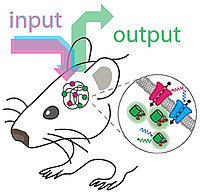
Our group, Neurobiological Computing in the Department of Neurophysiology, focuses on investigating function and information-processing capabilities of neuronal networks. The hippocampus, a central hub involved in the acquisition and consolidation of memories, is the focus of our interest, along with the plasticity mechanisms that underlie its function. It is of particular interest to examine, at the fundamental level, how memories are stored in and retrieved from the hippocampus, how neuronal networks can dynamically change their structure to perform a given task, and what factors influence these processes.
New experimental paradigms enhance our understanding of how computation occurs in the brain across different physiological and pathophysiological conditions and ultimately reveal underlying computational models. In line with this statement, we are interested in developing new methods, including software and hardware, for interrogating the brain circuits, with a focus on genetically encoded fluorescent indicators and optogenetics, spanning from relatively simple techniques to the analysis and manipulation of the activity of hundreds of neurons with cutting-edge multi-photon holographic stimulation.
Team
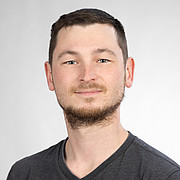
Dr. Andrey Formozov
Group leader
My path as a researcher has a period of a transition between physics and neuroscience with distinct achievements in both disciplines. Following the “motto” attributed to a 1980 Nobel Prize-winner Sydney Brenner, "Progress in science depends on new techniques, new discoveries and new ideas, probably in that order.", I am deeply convinced that application of the techniques will lead to a paradigm shift in neuroscience and new insights. I focus on the fundamental methodological aspects of neuroscientific research to reveal the computational capabilities of natural and virtual neurobiological systems and reinforce convergence between computational and experimental neuroscience.

Yılmaz Arda Ateş
PhD student

Stefan Vinitila
PhD student

Marco Wong
Master Student
Funding
SEED program (ongoing)
Scientific Software Open Call 2025 (ongoing)
Explore!Tech grant, Health + Life Science Alliance Heidelberg-Mannheim (2024)
Calls for Transfer, Hamburg Innovation
Alexander von Humboldt Fellowship
Selected publications, conference abstracts, patents
- Formozov, A., Wiegert, J.S. Computing in neuronal networks with plasticity via all-optical bidirectional interfacing. Bernstein Conference 2024.
- Formozov, A., et al. Fused-fiber-photometry based on a low-autofluorescence wideband multimode circulator . Optics Express 32(25): 44958–44969 (2024).
- Formozov, A.*, Dieter, A.*, Wiegert, J.S. A flexible and versatile system for multi-color fiber photometry and optogenetic manipulation . Cell Reports Methods 3(3) (2023). *equal contribution
- Formozov, A., Dieter, A., Wiegert, J.S. System and method for fiber photometry and optical manipulation. Patent application 4 245 212 A1.
- Formozov, A., Chini, M., Dieter, A., Yang, W., Pöpplau, J.A., Hanganu-Opatz, I.L., Wiegert, J.S. Calcium imaging and electrophysiology of hippocampal activity under anesthesia and natural sleep in mice.
- Yang, W., Chini, M., Pöpplau, J.A., Formozov, A., Dieter, A., Piechocinski, P., Rais, C., Morellini, F., Sporns, O., Hanganu-Opatz, I.L., Wiegert, J.S. Anesthetics fragment hippocampal network activity, alter spine dynamics, and affect memory consolidation . PLoS Biology (2021).
Alumni
- Cristina Baio, Master Thesis (Erasmus program)
- Andrei Kolinichenko, Master Thesis (Hans-Peter Wild Talent Scholarship)
Strategic partners
Light Microscopy Imaging (LIMa), Medical Faculty Mannheim, Heidelberg University
Scientific Software Center, Heidelberg University
Institute of Physiology and Pathophysiology, Heidelberg University
Neuro-inspired Theory, Modeling and Applications, Department of Physiology, University of Bern
